


Today I had an acrimonious argument with my roommate (the lying, irresponsible jerk...but that's beside the point) and, afterwards, I felt bad about it, so I went for a run as stress relief.
Let's take a look at that...a stressful stimulus elicited a healthy response! OMG, this may be the most emotionally healthy reaction I've had in twenty years.
I think I'll open some champagne to celebrate.
June 30, 2009

June 14, 2009
Birth control
This article on the politics of abortion is pretty okay, but the interesting part is the statistics:
(And those women who said they did use birth control were probably often talking about nothing but a condom!)
I think we need to, as far as we can, dissociate birth control from sex. As it is, people think of the decision to go on birth control as a preparation for sex; which makes young women hesitant about starting birth control, or about admitting it. (That's probably why so many young women say they're on the pill for medical reasons.) Now, the average age of first sexual intercourse in the U.S. is sixteen. Not a few girls do it at 12 or 13. Every woman should go on birth control by the age of 14 at the latest. As a precautionary measure. I would advise a public relations campaign aimed at parents. Parents don't like to admit their daughters will have sex--well, frame it as a medical issue, as was done more or less successfully with the HPV vaccine. That way, the ones who want to have sex will do it without being so neurotic about it and without getting pregnant, and the ones who don't won't be harmed.
Eight years ago, the Alan Guttmacher Institute surveyed over 10,000 American women who had abortions. Nearly half said they hadn’t used birth control in the month they conceived. When asked why not, 8 percent cited financial problems, and 2 percent said they didn’t know where to get it. By comparison, 28 percent said they had thought they wouldn’t get pregnant, 26 percent said they hadn’t expected to have sex and 23 percent said they had never thought about using birth control, had never gotten around to it or had stopped using it. Ten percent said their partners had objected to it. Three percent said they had thought it would make sex less fun.
This isn’t a shortage of pills or condoms. It’s a shortage of cultural and personal responsibility. It’s a failure to teach, understand, admit or care that unprotected sex can lead to the creation — and the subsequent killing, through abortion — of a developing human being.
(And those women who said they did use birth control were probably often talking about nothing but a condom!)
I think we need to, as far as we can, dissociate birth control from sex. As it is, people think of the decision to go on birth control as a preparation for sex; which makes young women hesitant about starting birth control, or about admitting it. (That's probably why so many young women say they're on the pill for medical reasons.) Now, the average age of first sexual intercourse in the U.S. is sixteen. Not a few girls do it at 12 or 13. Every woman should go on birth control by the age of 14 at the latest. As a precautionary measure. I would advise a public relations campaign aimed at parents. Parents don't like to admit their daughters will have sex--well, frame it as a medical issue, as was done more or less successfully with the HPV vaccine. That way, the ones who want to have sex will do it without being so neurotic about it and without getting pregnant, and the ones who don't won't be harmed.
On suicide
In our culture, suicide is the result of insanity; nothing else. It is often described as a ‘cowardly’ refusal to face the problems of life. The idea that living might be a cowardly refusal to face the problems of death is not considered. People who kill themselves are thought to be motivated by some sort of disguised desire for life; witness the popular belief that Muslim suicide bombers are motivated by sex. During World War II, Japanese kamikaze pilots were thought to be motivated by Shinto superstition; there were rumors about their having been given drink and drugs in order to key them up for the mission; some said they were chained into their cockpits. All misguided attempts at understanding them. (In fact, most of the kamikaze pilots were not religious, and before their flights they indulged in nothing stronger than a flask of sake, a frugal meal, and some farewell poetry.)
A kamikaze pilot wrote, “May our death be as sudden and clean as the shattering of crystal!” (Compare the modern ideal of death: dying in bed, asleep, without a struggle.)
A Japanese military instructor told his student: “Never shirk facing death. If in doubt whether to live or die, it is always better to die.”
The kamikaze pilots sung a song with the lines,
Never think of winning!
Thoughts of victory will only bring defeat.
When we lose, let us press forward, ever forward!
When I was younger, I studied Japanese history for a while. One book I came across was “The Nobility of Failure: Tragic Heroes in the History of Japan”, by the Orientalist and translator Ivan Morris. I read about 20 pages and liked it so much I put it aside and didn’t read it for ten years.
Anyway, recently I finally finished the book. It is an attempt to examine the ‘failed hero’ in Japanese tradition. As Morris says, the failed hero is not a man who fights, achieves his objective, and then dies. It’s a hero who, despite superhuman strength, courage and spiritual purity, never achieves what he set out to do. He may even help produce exactly the outcome he opposed: did the kamikaze pilots convince the U.S. to bomb Hiroshima and Nagasaki? In the classic case, the hero’s failure is obvious and inevitable from the beginning (like Mishima’s 1970 attempt to restore the power of the emperor). Morris says, “he is the man whose single-minded sincerity will not allow him to make the manoeuvres and compromises that are so often needed for mundane success...His death is no temporary setback which will be redeemed by his followers, but represents an irrevocable collapse of the cause he has championed.”
Yet somehow the failed hero has more purchase in the Japanese imagination than the successful hero;. In a Western context, it is as if Napoleon’s military successes were a mere footnote to Waterloo, Elba and death.
[One gets the impression that Ivan Morris wrote this book partially as an attempt to cope with the suicide of his friend, the nihilist nationalist novelist Mishima Yukio, who wrote one of the first memoirs to be open about the author’s homosexuality (“Confessions of a Mask”). Morris doesn’t devote a chapter to Mishima, but he seems to bring his name up at every opportunity.]
If it isn’t obvious, I myself feel a great deal of sympathy with this sort of attitude to suicide. I remember reading Shakespeare’s long poem, “The Rape of Lucrece”, when I was rather young, and deciding that if I were ever raped I would definitely slit my throat and ask to be buried under the lilac bush in the back yard. A naïve, morbid child; but I still basically think the same way. If you are the type of person who believes, like too many modern Americans, that there is nothing in life worth dying for, I am not talking to you. Those of us who can understand dying for a cause might be able to take the extra step towards understanding the desire to die for a cause while knowing your death will do no practical good.
The recent biographical film about Hunter S. Thompson insisted that his suicide was ‘inexplicable’--that it must have been a result of mental illness or drugs. On the contrary, it seems to have been a considered, rational choice. But the makers of the film couldn’t accept that. I wish someone had told them this: a good biographer studies his subject’s interaction with his culture. A bad biographer imposes his culture’s standards upon his subject.
A kamikaze pilot wrote, “May our death be as sudden and clean as the shattering of crystal!” (Compare the modern ideal of death: dying in bed, asleep, without a struggle.)
A Japanese military instructor told his student: “Never shirk facing death. If in doubt whether to live or die, it is always better to die.”
The kamikaze pilots sung a song with the lines,
Never think of winning!
Thoughts of victory will only bring defeat.
When we lose, let us press forward, ever forward!
When I was younger, I studied Japanese history for a while. One book I came across was “The Nobility of Failure: Tragic Heroes in the History of Japan”, by the Orientalist and translator Ivan Morris. I read about 20 pages and liked it so much I put it aside and didn’t read it for ten years.
Anyway, recently I finally finished the book. It is an attempt to examine the ‘failed hero’ in Japanese tradition. As Morris says, the failed hero is not a man who fights, achieves his objective, and then dies. It’s a hero who, despite superhuman strength, courage and spiritual purity, never achieves what he set out to do. He may even help produce exactly the outcome he opposed: did the kamikaze pilots convince the U.S. to bomb Hiroshima and Nagasaki? In the classic case, the hero’s failure is obvious and inevitable from the beginning (like Mishima’s 1970 attempt to restore the power of the emperor). Morris says, “he is the man whose single-minded sincerity will not allow him to make the manoeuvres and compromises that are so often needed for mundane success...His death is no temporary setback which will be redeemed by his followers, but represents an irrevocable collapse of the cause he has championed.”
Yet somehow the failed hero has more purchase in the Japanese imagination than the successful hero;. In a Western context, it is as if Napoleon’s military successes were a mere footnote to Waterloo, Elba and death.
[One gets the impression that Ivan Morris wrote this book partially as an attempt to cope with the suicide of his friend, the nihilist nationalist novelist Mishima Yukio, who wrote one of the first memoirs to be open about the author’s homosexuality (“Confessions of a Mask”). Morris doesn’t devote a chapter to Mishima, but he seems to bring his name up at every opportunity.]
If it isn’t obvious, I myself feel a great deal of sympathy with this sort of attitude to suicide. I remember reading Shakespeare’s long poem, “The Rape of Lucrece”, when I was rather young, and deciding that if I were ever raped I would definitely slit my throat and ask to be buried under the lilac bush in the back yard. A naïve, morbid child; but I still basically think the same way. If you are the type of person who believes, like too many modern Americans, that there is nothing in life worth dying for, I am not talking to you. Those of us who can understand dying for a cause might be able to take the extra step towards understanding the desire to die for a cause while knowing your death will do no practical good.
The recent biographical film about Hunter S. Thompson insisted that his suicide was ‘inexplicable’--that it must have been a result of mental illness or drugs. On the contrary, it seems to have been a considered, rational choice. But the makers of the film couldn’t accept that. I wish someone had told them this: a good biographer studies his subject’s interaction with his culture. A bad biographer imposes his culture’s standards upon his subject.
On memory
Rhiannon, a character in Kingsley Amis’s “The Old Devils” is talking about how, in retrospect, she never really liked going to the beach, but she ‘did enjoy parts anyway’.
“You noticed things like your hair and what horrible stuff sand is but you didn't really take it in. You were wondering how it was going and what would happen next and whether you could handle it. “
A very Proustian passage. We don’t really know what we’re experiencing when we’re experiencing it. While things are coming at us, as Amis says, we’re focused on how we’re doing, what other people are likely to do next, and probably how unfair they’re being. Only later, sometimes years later, can we look at ourselves as if the person we were in the past was a character in a book; or rather, sometimes, in a case study. Then we think, well, that was really terrible wasn’t it? How could I have accepted that as normal? Or, how was I not aware how lucky I was?
I think Dostoyevsky says somewhere that man is the animal who can get used to anything. That’s why you can never really ask someone to judge his life. Are you happy? If he says yes, he may mean, yes, happier than I was yesterday. Or, happier than I was in my childhood. And there’s always the possibility that what makes him judge himself happy is and always has been below what makes you judge yourself happy. And there is, as far as I know, no way to measure happiness except through these useless personal reports.
In conclusion, human knowledge is largely illusory.
“You noticed things like your hair and what horrible stuff sand is but you didn't really take it in. You were wondering how it was going and what would happen next and whether you could handle it. “
A very Proustian passage. We don’t really know what we’re experiencing when we’re experiencing it. While things are coming at us, as Amis says, we’re focused on how we’re doing, what other people are likely to do next, and probably how unfair they’re being. Only later, sometimes years later, can we look at ourselves as if the person we were in the past was a character in a book; or rather, sometimes, in a case study. Then we think, well, that was really terrible wasn’t it? How could I have accepted that as normal? Or, how was I not aware how lucky I was?
I think Dostoyevsky says somewhere that man is the animal who can get used to anything. That’s why you can never really ask someone to judge his life. Are you happy? If he says yes, he may mean, yes, happier than I was yesterday. Or, happier than I was in my childhood. And there’s always the possibility that what makes him judge himself happy is and always has been below what makes you judge yourself happy. And there is, as far as I know, no way to measure happiness except through these useless personal reports.
In conclusion, human knowledge is largely illusory.
Pasta with Swiss chard and cream sauce
My roommate gave me a can of cream of celery soup the other day and I had absolutely no idea what to do with it. I sat staring for a few minutes trying to figure out why anyone would put celery in soup. Then I found this recipe.
And it’s good! Even before adding the cheese & sour cream, the vegetable/cream of celery sauce was delicious!
But, like most American-style recipes, the dish needs more vegetables and more spice. I added black pepper, a little cayenne pepper, and some whole brown mustard seeds. Not too much spice, because the dish is already fairly strong-flavored.
For vegetables, I used blanced spinach and Swiss chard, sliced plum tomatoes and canned artichoke hearts. I also grated and sautéd some red cabbage, then sprinkled it on top for color as well as nutrition.
I drank a cheap rosé.
And it’s good! Even before adding the cheese & sour cream, the vegetable/cream of celery sauce was delicious!
But, like most American-style recipes, the dish needs more vegetables and more spice. I added black pepper, a little cayenne pepper, and some whole brown mustard seeds. Not too much spice, because the dish is already fairly strong-flavored.
For vegetables, I used blanced spinach and Swiss chard, sliced plum tomatoes and canned artichoke hearts. I also grated and sautéd some red cabbage, then sprinkled it on top for color as well as nutrition.
I drank a cheap rosé.
The most interesting idioms are the offensive ones
The English really used to hate the Dutch. We’ve all heard of Dutch treat and Dutch courage, but what about other expressions of hateful chauvinism, such as:
Dutch widow (a prostitute)
Dutch bargain (a drunken agreement)
Dutch feast (one at which the host gets drunk before his guests)
Dutch uncle (a brutal adviser)
Dutch reckoning (a non-itemized bill)
I guess the common thread is that something that is 'Dutch' is not what it purports to be, or not how it should be (like an 'Indian giver'). Fascinating!
Dutch widow (a prostitute)
Dutch bargain (a drunken agreement)
Dutch feast (one at which the host gets drunk before his guests)
Dutch uncle (a brutal adviser)
Dutch reckoning (a non-itemized bill)
I guess the common thread is that something that is 'Dutch' is not what it purports to be, or not how it should be (like an 'Indian giver'). Fascinating!
June 13, 2009
the Velvet Tango Room
If you are the type of asshole who likes to spend the precious time remaining to you on earth sitting around complaining about people who put vodka in martinis, this is the bar for you!

The location is very speakeasy; you pass the West Side Market, cross a bridge, and a block later, between the abandoned houses and the train tracks, you are in the sort of place which seems to have nothing at all acceptable to offer. Until...
The inside is fairly informal, which I approve of. Evening gowns are fun sometimes, but I do not like feeling I have to dress up to my drink. Speakeasies were not upper-class venues; they were democratic if anything; cocktails should be the same.
Speaking of cocktails, my first was the Manhattan, made with rye! I was already won over; this is the only bar I've been to which served rye. They also use a house-made sweet vermouth, actually more of a red wine reduction--winey and fruity. I wasn't expecting so much vermouth, and would have preferred a more modern Manhattan--but their version was really more artistic than the 4 to 1 ratio I'm used to. Also, real Maraschino cherries. The whole drink was as dark as grape juice--in contrast to other bars' Manhattans that look, and taste, drenched in cherry syrup.
If you are like me, you look down on the Whiskey Sour. A bar version is drowned in sour mix; my home version tends to be either too sour or flavorless. The Velvet Tango Room version will destroy everything you thought you knew about whiskey sours. The secret: an egg white! I even got a scientific explanation for this; because an egg white is thick protein, it smooths out the sour tastes; because an egg white is bland, you don't taste it, but you feel its smooth, foamy texture. The lemon taste is there, but it doesn't intrude. It's more like the lime in a very subtle key lime pie.
At the bar, I dared to drink the raw egg; at home, I would drop it in briskly boiling water for ten seconds, then fish it out and ice it. This keeps the egg white liquid and shakeable while, I am told, killing any germs.
Another drink I look down on is the Dark & Stormy. The Velvet Tango Room makes their own ginger beer, and I have high hopes for it. I will report on this later.

My fourth choice was the Widow's Kiss--Benedictine, Chartreuse and something I forget. This has interesting ingredients, but somehow they don't come together to form any whole, and nothing except sweetness was discernible from the Benedictine. Of course, my taste buds may have been dulled by this point.
More exciting drinks to try here: an Apple Brandy Sour, Caipirinha, and Hemingway Daiquiri (I drink the latter at home all the time, but it's very tart; an egg white might do a great job polishing up the grapefruit and lime flavors.)
It soon became obvious to the owner that my companion and I were interested in cocktails, which resulted in scads of free cocktails, conversation and compliments, in a transparent and successful attempt to get us to come back. Almost as good as the booze is the chance to nerd out over it. I also went home with a free bottle of their house-made bitters, which is full of Vietnamese cinnamon. So, it's already in my top three bars, and I may not be able to go back to #2.
The drinks are all $10 during Happy Hour and $15 at other times--which I consider reasonable, for the quality. And of course, if you don't like a drink, you can request a free replacement.
This whole experience made me realize how damn lazy I've been when it comes to drinking! If I try something and don't like it, I just forget about it and go back to an old standby or boring old Scotch & soda. If I were just a little more Scientific about it, and bought better mixers, and tried some adjusting, I'm sure my range of drinks would be greatly expanded.
For instance, the Knockout Cocktail:
1 oz dry vermouth
1 oz gin
1/2 oz anisette
1 tsp white c de m
cherry
I drink this, but I drink it knowing it's mediocre. What about Pernod rather than anisette? What about an egg white? And a more upscale crème de menthe, if there is one, would make a big difference. Update to follow!

The location is very speakeasy; you pass the West Side Market, cross a bridge, and a block later, between the abandoned houses and the train tracks, you are in the sort of place which seems to have nothing at all acceptable to offer. Until...
The inside is fairly informal, which I approve of. Evening gowns are fun sometimes, but I do not like feeling I have to dress up to my drink. Speakeasies were not upper-class venues; they were democratic if anything; cocktails should be the same.
Speaking of cocktails, my first was the Manhattan, made with rye! I was already won over; this is the only bar I've been to which served rye. They also use a house-made sweet vermouth, actually more of a red wine reduction--winey and fruity. I wasn't expecting so much vermouth, and would have preferred a more modern Manhattan--but their version was really more artistic than the 4 to 1 ratio I'm used to. Also, real Maraschino cherries. The whole drink was as dark as grape juice--in contrast to other bars' Manhattans that look, and taste, drenched in cherry syrup.
If you are like me, you look down on the Whiskey Sour. A bar version is drowned in sour mix; my home
 version tends to be either too sour or flavorless. The Velvet Tango Room version will destroy everything you thought you knew about whiskey sours. The secret: an egg white! I even got a scientific explanation for this; because an egg white is thick protein, it smooths out the sour tastes; because an egg white is bland, you don't taste it, but you feel its smooth, foamy texture. The lemon taste is there, but it doesn't intrude. It's more like the lime in a very subtle key lime pie.
At the bar, I dared to drink the raw egg; at home, I would drop it in briskly boiling water for ten seconds, then fish it out and ice it. This keeps the egg white liquid and shakeable while, I am told, killing any germs.
Another drink I look down on is the Dark & Stormy. The Velvet Tango Room makes their own ginger beer, and I have high hopes for it. I will report on this later.
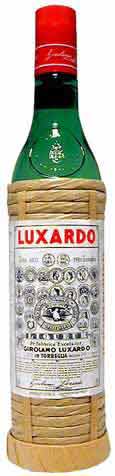
I have a bottle of Luxardo maraschino liqueur. It's been here for a year. I hate it, I hate the way it tastes, and I want it gone. After I went on in this vein for a while, I received an Aviation cocktail. Gin, lemon juice and maraschino. No crème de violette-that would be 'gilding the lily'. It was quite good--the Luxardo was the first and last taste perceivable, but there was so much in between that I was willing to tolerate it.
My fourth choice was the Widow's Kiss--Benedictine, Chartreuse and something I forget. This has interesting ingredients, but somehow they don't come together to form any whole, and nothing except sweetness was discernible from the Benedictine. Of course, my taste buds may have been dulled by this point.
More exciting drinks to try here: an Apple Brandy Sour, Caipirinha, and Hemingway Daiquiri (I drink the latter at home all the time, but it's very tart; an egg white might do a great job polishing up the grapefruit and lime flavors.)
It soon became obvious to the owner that my companion and I were interested in cocktails, which resulted in scads of free cocktails, conversation and compliments, in a transparent and successful attempt to get us to come back. Almost as good as the booze is the chance to nerd out over it. I also went home with a free bottle of their house-made bitters, which is full of Vietnamese cinnamon. So, it's already in my top three bars, and I may not be able to go back to #2.
The drinks are all $10 during Happy Hour and $15 at other times--which I consider reasonable, for the quality. And of course, if you don't like a drink, you can request a free replacement.
This whole experience made me realize how damn lazy I've been when it comes to drinking! If I try something and don't like it, I just forget about it and go back to an old standby or boring old Scotch & soda. If I were just a little more Scientific about it, and bought better mixers, and tried some adjusting, I'm sure my range of drinks would be greatly expanded.
For instance, the Knockout Cocktail:
1 oz dry vermouth
1 oz gin
1/2 oz anisette
1 tsp white c de m
cherry
I drink this, but I drink it knowing it's mediocre. What about Pernod rather than anisette? What about an egg white? And a more upscale crème de menthe, if there is one, would make a big difference. Update to follow!
What not to name your children
Here is a list of the most popular baby names! It seems a little off to me because all the names are so damn upper crust. Ethan? Alexis? Isabella?
Bell peppers
As a bell pepper ripens, it turns from green to yellow, orange, or red, depending on the variety. These bright peppers are sweeter simply because they are ripe, whereas the bitter green pepper is unripe. Purple peppers, too, are harvested when immature and would turn an uncommonly dark green if allowed to ripen fully. So unless you're fond of the tannic bitterness of the common green and the purple varieties, we suggest sticking with yellow, orange, or red.
[Cook's Illustrated]
June 10, 2009
Atheism vs. idolatry
Pierre Bayle, the 17th-century French Enlightenment philosopher, wrote a book called "Pensées sur la comète" which starts with comets but very quickly switches to what he really wants to talk about, which is the connection between religion and social order. The book is an attempt to stop talking about the superiority of Christians over atheists (an argument Bayle knew the atheists couldn't win) and start talking about the superiority of atheists over idolators. (Idolators here are defined as anyone who is fanatical, superstitious, or follows the wrong religious.)
Here's Bayle's brillant analogy: a husband prefers that his wife be indifferent to all men rather than succumbing to both him and to another man, while the Gallant is fine with her loving both her husband and him. Similarly, God might prefer us to be atheists rather than subscribing to the wrong religion! A clever twist on Pascal's wager.
Here's Bayle's brillant analogy: a husband prefers that his wife be indifferent to all men rather than succumbing to both him and to another man, while the Gallant is fine with her loving both her husband and him. Similarly, God might prefer us to be atheists rather than subscribing to the wrong religion! A clever twist on Pascal's wager.
Jerry Falwell and Christopher Hitchens
Sometimes, when I might be feeling a little down, or when my ability to judge others seems to be wavering, I'll watch this video.
Even on a casual news program, Hitchens' word choice is awesome. 'Chaucerian frauds'. And some quotes:
And then after about my 20th viewing I began to notice his stumbling over words; in this part in particular he is clearly drunk:
Awesome!
Even on a casual news program, Hitchens' word choice is awesome. 'Chaucerian frauds'. And some quotes:
I think it's a pity there isn't a hell for him to go to.
People like that should be out in the street shouting and hollering with a cardboard sign and selling pencils from a cup!
--Do you believe he believed what he spoke?
Of course not! He woke up every morning pinching his chubby little flanks and thinking, I've got away with it again!
If he read the Bible at all, and I would doubt that he could actually read any long book--at all...
And then after about my 20th viewing I began to notice his stumbling over words; in this part in particular he is clearly drunk:
L- lots of people are going to die and are already lea- leading miserable lives because of the nonsense preached by this (beat) man.
Awesome!
Wine recommendation
This dry Riesling from New Zealand is delicious!

The Kim Crawford Marlborough Dry Riesling 2006. Not expensive. I can't describe tastes yet, so I'll just go with 'delicious'.

The Kim Crawford Marlborough Dry Riesling 2006. Not expensive. I can't describe tastes yet, so I'll just go with 'delicious'.
June 9, 2009
My new diet.
Breakfast:
1 egg. 1 glass wine.
Lunch:
2 eggs. 2 glasses wine.
Dinner:
1 steak. The rest of the bottle.
Seriously. I'm only doing this for a few days, in case you're worried about my getting scurvy. Although, as I recently learned, only 1/2 ounce of lemon juice a day is enough to prevent scurvy! That's right: you heard it here first: one whiskey sour a day, and you never have to eat fruit again! And it's the excuse you've been wanting to have whiskey for breakfast.
1 egg. 1 glass wine.
Lunch:
2 eggs. 2 glasses wine.
Dinner:
1 steak. The rest of the bottle.
Seriously. I'm only doing this for a few days, in case you're worried about my getting scurvy. Although, as I recently learned, only 1/2 ounce of lemon juice a day is enough to prevent scurvy! That's right: you heard it here first: one whiskey sour a day, and you never have to eat fruit again! And it's the excuse you've been wanting to have whiskey for breakfast.
An essay on how reading leads to drinking and drinking leads to reading.
I personally am unable to read even the most indirect reference to Dorothy Parker without craving a martini.
This is how addictions begin, subtly and then suddenly. Soon I found myself devouring every hard-boiled word of Chandler’s. And then I read them again. I started talking in similes and metaphors. One day I told a dear friend that he had a face like a collapsed lung. I couldn’t help myself. A progression took hold. Chandler led me to Hammett and from Hammett I staggered to F. Scott Fitzgerald. Fitzgerald led me to Hemingway.
I personally am unable to read even the most indirect reference to Dorothy Parker without craving a martini.
June 8, 2009
Matching wine with Eastern food
"Let them drink beer!" So said my wine connoisseur friend when I outlined my dilemma. My boss and his wife were coming over for dinner, and we had decided to prepare an Indian feast (a big mistake, as it turned out, but more on that in another column). Hence the question: What wine to serve with Indian food?
I'm so glad someone addressed this problem! The article is on Slate: with Indian food Gewürztraminer or pinot blanc apparently works. For Japanese food, dry French whites are recommended. I prefer red wine, but I haven't found any that really match with spicy vegetarian food.
Subscribe to:
Posts (Atom)